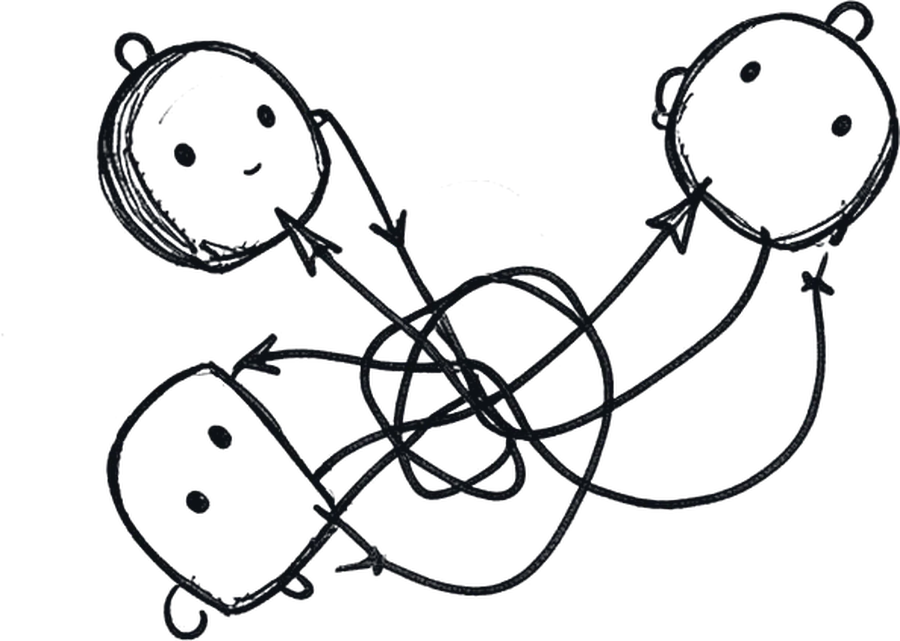
When implementation is cheap, splitting work across agents can cost more in coordination than it saves. The first decision is whether the work should be split at all.
Three finished tasks can still leave you with one unfinished feature. That’s the risk behind the appeal of software factories. If another agent is easy to start, giving each part of a feature its own worker looks like an obvious way to go faster. But the time saved writing the parts can disappear when we try to make them work together.
I think that’s the decision worth paying attention to: not how many agents we can run, but whether dividing this particular job will actually help.
Two reasonable choices that don’t fit
Imagine building an export feature. One agent handles the screen; another handles generating the file. The first follows an existing download button: click, wait, receive a file. The second notices that large exports take time, so it builds a background job that emails a link when the file is ready.
Both choices are reasonable. They just describe different experiences. Now the screen needs a way to show that the export is running. Someone has to decide whether users retrieve the file in the product or through email. The tests written for each part need to change too. The agents may have finished quickly. The feature hasn’t. We’ve bought two implementations and a new job: reconciling them.
I’d start this differently. Give one agent the smallest working version of the whole journey: request a small export, generate it and download it. Then decide how that journey should handle a longer wait before dividing up the remaining work. That doesn’t mean one agent builds the entire feature forever. It means establishing how the pieces fit before asking separate workers to build them.
Split where the work can separate
This isn’t a new problem. Human teams make the same mistake when work is divided by technical layer before the behaviour is agreed. Agents don’t remove it: they can follow different assumptions, miss context and work from information that’s already out of date.
What’s different is how easy it becomes to start more work. When implementation took longer, parallelism could justify quite a lot of coordination. As implementation gets cheaper, the handoffs can become a larger part of the total effort.
Sometimes splitting is still clearly useful. Separate bug investigations or independent changes can move forward without waiting for each other. One agent also has limits; keeping too much work together can make it harder to stay focused. But if two workers repeatedly need the same decision before either can proceed, I’d question the split before adding another agent to coordinate them.
The useful measure is how long it takes to reach a working result, including the time spent explaining, retrying and joining things up. How quickly each agent reports completion tells us much less.
Before starting another worker, I’d ask what it can finish without the others changing underneath it. If the answer is very little, I’d keep that work together for now. Another agent only makes the job faster if the handoff costs less than the time it saves.